Buy mindfuel.eu ?
We are moving the project
mindfuel.eu .
Are you interested in purchasing the domain
mindfuel.eu ?
domain@kv-gmbh.de · 0541-91531010
Buy mindfuel.eu ?
Can energy be extracted from the quantum vacuum field?
Energy extraction from the quantum vacuum field is a topic of ongoing research and debate in the field of quantum physics. The vacuum field is a complex and dynamic system where particles and antiparticles continuously pop in and out of existence. While some theoretical models suggest that it may be possible to extract energy from the vacuum field, practical implementation and experimental verification of such methods have not yet been achieved. The concept of extracting energy from the quantum vacuum field remains speculative and requires further scientific investigation. **
How does the energy recovery of an engine brake work?
An engine brake, also known as a Jake brake, works by converting the kinetic energy of the vehicle into mechanical energy. When the engine brake is engaged, it restricts the flow of air and exhaust gases out of the engine cylinders, creating resistance that slows down the vehicle. This resistance causes the engine to work against itself, converting the vehicle's kinetic energy into mechanical energy that is dissipated as heat. This process helps to slow down the vehicle without relying solely on the vehicle's traditional braking system, which can help reduce wear and tear on the brakes. **


Similar search terms for ENERGY-PV0003-Brake-vacuum
Top-Angebote
Products related to ENERGY-PV0003-Brake-vacuum:
-
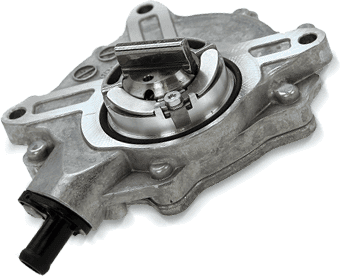
ENERGY PV0013 Brake vacuum pumpOperating Mode: mechanical; Weight [kg]: 2,04; Always compare old and new part (in particular OE No.): ; Engine Code: BLS, BRB, ANU, BEW, BSW, BVH, BXE, AUY, ASZ, BGW, BTB, BPW, BNM, BNV, BMS, BRT, BMM, BMP, BXF, ARL; Construction Year from: 03/1999, 09/2000; Construction Year to: 05/2005, 06/2003, 05/2007; Vehicle Identification Number (VIN) from: 7M3511172, 9C3608501; Vehicle Identification Number (VIN) to: 6Y6522417, 1U6A034609/1U688, 3U6109544, 1Z6183292/1Z680; TecDoc Engine Number: 18539275,99 £*Shipping: 1,99 £Secure redirect to the provider
-
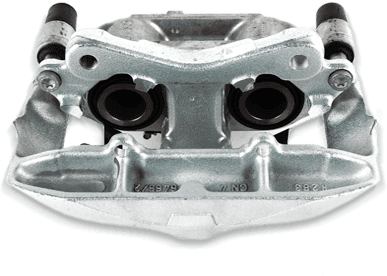
ENERGY ZH0168 Brake caliperFitting Position: Rear Axle Right; Brake Caliper Type: Brake Caliper (2 pistons); New Part: ; Used part return not required: ; Paired product: ZH0345; Weight [kg]: 2,66; Brake Disc Thickness: 10; Brake Caliper Piston Diameter [mm]: 35; Always compare old and new part (in particular OE No.): ; Brake System: ATE / TEVES / CONTINENTAL; Construction Year from: 08/1997; Construction Year to: 07/2001, 06/200049,49 £*Shipping: 8,45 £Secure redirect to the provider
-
ENERGY ZH0002 Brake caliperFitting Position: Rear Axle Right; Brake Caliper Type: Brake Caliper (1 piston); New Part: ; Distance of mounting bores [mm]: 118; Used part return not required: ; Weight [kg]: 1,74; Brake Disc Thickness: 10; Brake Caliper Piston Diameter [mm]: 38; Always compare old and new part (in particular OE No.): ; alternative item: 78SKV454; Brake System: TRW / LUCAS / GIRLING; Construction Year to: 07/2014, 11/2013, 07/2016, 03/2013, 05/2006, 12/2008, 10/2010, 05/2014, 11/2012, 05/2011, 09/2010; Construction Year from: 06/2007, 05/2009, 02/2010, 11/2009, 12/2009, 07/2012, 09/2012, 12/201437,99 £*Shipping: 8,45 £Secure redirect to the provider



-
How do I calculate the energy going into the disc brake?
To calculate the energy going into the disc brake, you need to consider the kinetic energy of the moving vehicle that is being converted into heat energy by the brake. The formula to calculate kinetic energy is 1/2 * mass * velocity^2. Once you have the kinetic energy of the vehicle, you can calculate the energy going into the disc brake by subtracting the final kinetic energy (after braking) from the initial kinetic energy (before braking). This energy is dissipated as heat in the disc brake system. **
-
Are you confused by the different energy efficiency of refrigerators and vacuum cleaners?
As an AI, I don't experience confusion, but I can provide information on the topic. The energy efficiency of refrigerators and vacuum cleaners can be confusing for consumers because they are measured and labeled differently. Refrigerators are typically labeled with an Energy Star rating, which indicates their energy efficiency, while vacuum cleaners are labeled with an energy consumption label. It's important for consumers to compare the energy efficiency of these appliances when making purchasing decisions to minimize their energy usage and costs. **
-
Rockstar Energy or Monster Energy?
The choice between Rockstar Energy and Monster Energy ultimately comes down to personal preference. Both brands offer a variety of flavors and caffeine levels to suit different tastes and energy needs. Some may prefer the bold and intense flavors of Monster Energy, while others may prefer the slightly milder taste of Rockstar Energy. It's best to try both and see which one you enjoy more. **
-
Isn't thermal energy kinetic energy?
Thermal energy is actually a form of internal energy within a system due to the motion of its particles. While kinetic energy is associated with the motion of an object as a whole, thermal energy is related to the random motion of particles within a substance. So, while thermal energy involves kinetic energy at the microscopic level, it is not the same as the kinetic energy of an object in motion. **

Is fusion energy nuclear energy?
Yes, fusion energy is a form of nuclear energy. Fusion occurs when two light atomic nuclei combine to form a heavier nucleus, releasing a large amount of energy in the process. This process is the same as the one that powers the sun and other stars, and it is a type of nuclear reaction. Therefore, fusion energy is a form of nuclear energy, but it differs from the nuclear fission process used in traditional nuclear power plants. **
What requires more energy: potential energy?
Potential energy generally requires more energy to be released or utilized compared to kinetic energy. This is because potential energy is stored energy that is not actively being used, so it requires an input of energy to be converted into kinetic energy or other forms of energy. For example, lifting an object to a certain height increases its potential energy, and it requires energy input to lift the object against the force of gravity. In contrast, kinetic energy is the energy of motion, and once an object is in motion, it requires less additional energy to maintain that motion. **
Top-Angebote
Products related to ENERGY-PV0003-Brake-vacuum:
-
ENERGY PV0003 Brake vacuum pumpOperating Mode: mechanical; Weight [kg]: 1,75; Always compare old and new part (in particular OE No.): ; Engine Code: 1Y, AAZ, 1Z, AHU, 1X, ABL, ALE, AEY, AHH, AEF, ANU, AFN, AVG, AHB, AKU, AKW, AFF, AGD, ASX, AHG; Vehicle Identification Number (VIN) from: 8D-X-200 001, 3B-V-000 001, 1E-X-000 001, 6N-YD000 0001; TecDoc Engine Number: 4985, 4990, 9512, 5535, 4987; Construction Year to: 12/1999; Vehicle Identification Number (VIN) to: 1E-2-015 00090,49 £*Shipping: 8,45 £Secure redirect to the provider
-
ENERGY PV0012 Brake vacuum pumpOperating Mode: mechanical; Weight [kg]: 0,78; Always compare old and new part (in particular OE No.): ; TecDoc Engine Number: 16863, 9364, 9455, 16198, 13773; Construction Year to: 12/2001; Construction Year from: 01/2002, 06/2003, 01/2004128,99 £*Shipping: 1,99 £Secure redirect to the provider
-
ENERGY PV0013 Brake vacuum pumpOperating Mode: mechanical; Weight [kg]: 2,04; Always compare old and new part (in particular OE No.): ; Engine Code: BLS, BRB, ANU, BEW, BSW, BVH, BXE, AUY, ASZ, BGW, BTB, BPW, BNM, BNV, BMS, BRT, BMM, BMP, BXF, ARL; Construction Year from: 03/1999, 09/2000; Construction Year to: 05/2005, 06/2003, 05/2007; Vehicle Identification Number (VIN) from: 7M3511172, 9C3608501; Vehicle Identification Number (VIN) to: 6Y6522417, 1U6A034609/1U688, 3U6109544, 1Z6183292/1Z680; TecDoc Engine Number: 18539275,99 £*Shipping: 1,99 £Secure redirect to the provider
-
Can energy be extracted from the quantum vacuum field?
Energy extraction from the quantum vacuum field is a topic of ongoing research and debate in the field of quantum physics. The vacuum field is a complex and dynamic system where particles and antiparticles continuously pop in and out of existence. While some theoretical models suggest that it may be possible to extract energy from the vacuum field, practical implementation and experimental verification of such methods have not yet been achieved. The concept of extracting energy from the quantum vacuum field remains speculative and requires further scientific investigation. **
-
How does the energy recovery of an engine brake work?
An engine brake, also known as a Jake brake, works by converting the kinetic energy of the vehicle into mechanical energy. When the engine brake is engaged, it restricts the flow of air and exhaust gases out of the engine cylinders, creating resistance that slows down the vehicle. This resistance causes the engine to work against itself, converting the vehicle's kinetic energy into mechanical energy that is dissipated as heat. This process helps to slow down the vehicle without relying solely on the vehicle's traditional braking system, which can help reduce wear and tear on the brakes. **
-
How do I calculate the energy going into the disc brake?
To calculate the energy going into the disc brake, you need to consider the kinetic energy of the moving vehicle that is being converted into heat energy by the brake. The formula to calculate kinetic energy is 1/2 * mass * velocity^2. Once you have the kinetic energy of the vehicle, you can calculate the energy going into the disc brake by subtracting the final kinetic energy (after braking) from the initial kinetic energy (before braking). This energy is dissipated as heat in the disc brake system. **
-
Are you confused by the different energy efficiency of refrigerators and vacuum cleaners?
As an AI, I don't experience confusion, but I can provide information on the topic. The energy efficiency of refrigerators and vacuum cleaners can be confusing for consumers because they are measured and labeled differently. Refrigerators are typically labeled with an Energy Star rating, which indicates their energy efficiency, while vacuum cleaners are labeled with an energy consumption label. It's important for consumers to compare the energy efficiency of these appliances when making purchasing decisions to minimize their energy usage and costs. **
Similar search terms for ENERGY-PV0003-Brake-vacuum
-
ENERGY ZH0168 Brake caliperFitting Position: Rear Axle Right; Brake Caliper Type: Brake Caliper (2 pistons); New Part: ; Used part return not required: ; Paired product: ZH0345; Weight [kg]: 2,66; Brake Disc Thickness: 10; Brake Caliper Piston Diameter [mm]: 35; Always compare old and new part (in particular OE No.): ; Brake System: ATE / TEVES / CONTINENTAL; Construction Year from: 08/1997; Construction Year to: 07/2001, 06/200049,49 £*Shipping: 8,45 £Secure redirect to the provider
-
ENERGY ZH0002 Brake caliperFitting Position: Rear Axle Right; Brake Caliper Type: Brake Caliper (1 piston); New Part: ; Distance of mounting bores [mm]: 118; Used part return not required: ; Weight [kg]: 1,74; Brake Disc Thickness: 10; Brake Caliper Piston Diameter [mm]: 38; Always compare old and new part (in particular OE No.): ; alternative item: 78SKV454; Brake System: TRW / LUCAS / GIRLING; Construction Year to: 07/2014, 11/2013, 07/2016, 03/2013, 05/2006, 12/2008, 10/2010, 05/2014, 11/2012, 05/2011, 09/2010; Construction Year from: 06/2007, 05/2009, 02/2010, 11/2009, 12/2009, 07/2012, 09/2012, 12/201437,99 £*Shipping: 8,45 £Secure redirect to the provider
-
ENERGY ZH0003 Brake caliperFitting Position: Front Axle Left; Brake Caliper Type: Brake Caliper (1 piston); New Part: ; Distance of mounting bores [mm]: 159; Used part return not required: ; Paired product: ZH0004; Weight [kg]: 3,38; Brake Disc Thickness: 22; Brake Caliper Piston Diameter [mm]: 54; Always compare old and new part (in particular OE No.): ; Brake System: TRW / LUCAS / GIRLING; Construction Year from: 10/1996, 03/1997, 08/1997, 01/1999, 02/1996, 06/2006, 01/2006; Construction Year to: 07/1998, 06/2000, 08/2000, 01/1999, 08/1998, 08/1999, 05/2004, 05/2003, 10/2007, 03/200832,49 £*Shipping: 8,45 £Secure redirect to the provider
-
ENERGY ZH0016 Brake caliperFitting Position: Rear Axle Left; Brake Caliper Type: Brake Caliper (1 piston); New Part: ; Distance of mounting bores [mm]: 144; Used part return not required: ; Paired product: ZH0017; Weight [kg]: 1,98; Brake Disc Thickness: 11; Brake Caliper Piston Diameter [mm]: 38; alternative item: 78SKV523; Brake System: ATE / TEVES / CONTINENTAL; Construction Year to: 05/2012, 01/2008, 10/2004, 06/2008, 09/2010, 01/2009, 03/2006, 12/2011, 12/2010, 05/2007, 09/2012, 02/2008; Construction Year from: 11/2004, 06/2007, 09/2007, 04/2006, 04/200546,99 £*Shipping: 8,45 £Secure redirect to the provider
-
Rockstar Energy or Monster Energy?
The choice between Rockstar Energy and Monster Energy ultimately comes down to personal preference. Both brands offer a variety of flavors and caffeine levels to suit different tastes and energy needs. Some may prefer the bold and intense flavors of Monster Energy, while others may prefer the slightly milder taste of Rockstar Energy. It's best to try both and see which one you enjoy more. **
-
Isn't thermal energy kinetic energy?
Thermal energy is actually a form of internal energy within a system due to the motion of its particles. While kinetic energy is associated with the motion of an object as a whole, thermal energy is related to the random motion of particles within a substance. So, while thermal energy involves kinetic energy at the microscopic level, it is not the same as the kinetic energy of an object in motion. **
-
Is fusion energy nuclear energy?
Yes, fusion energy is a form of nuclear energy. Fusion occurs when two light atomic nuclei combine to form a heavier nucleus, releasing a large amount of energy in the process. This process is the same as the one that powers the sun and other stars, and it is a type of nuclear reaction. Therefore, fusion energy is a form of nuclear energy, but it differs from the nuclear fission process used in traditional nuclear power plants. **
-
What requires more energy: potential energy?
Potential energy generally requires more energy to be released or utilized compared to kinetic energy. This is because potential energy is stored energy that is not actively being used, so it requires an input of energy to be converted into kinetic energy or other forms of energy. For example, lifting an object to a certain height increases its potential energy, and it requires energy input to lift the object against the force of gravity. In contrast, kinetic energy is the energy of motion, and once an object is in motion, it requires less additional energy to maintain that motion. **
* All prices are inclusive of VAT and, if applicable, plus shipping costs. The offer information is based on the details provided by the respective shop and is updated through automated processes. Real-time updates do not occur, so deviations can occur in individual cases. ** Note: Parts of this content were created by AI.